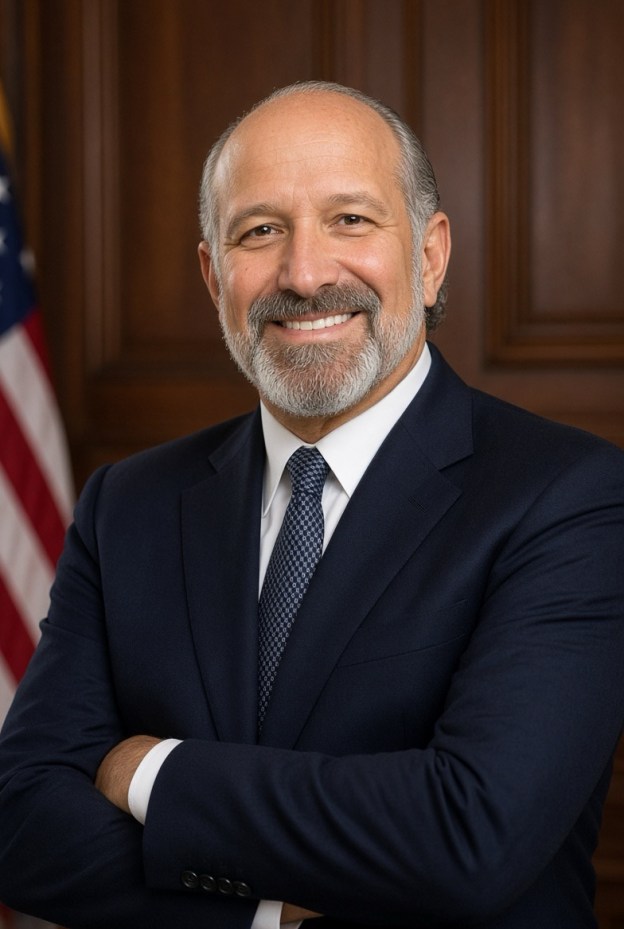
Principal Powers and Duties
• Presidential advisor and Cabinet role: Serves as the President’s principal advisor on all matters relating to commerce, trade, economic growth, industrial policy, and related areas. Participates in national policy formulation through the Cabinet. Ranks 10th in the presidential line of succession.
• Department leadership and management: Heads the Department of Commerce; provides policy direction, general supervision, and organizational management. Determines functions and authorities of principal components via Department Organization Orders. Appointed by the President with Senate confirmation and serves at the President’s pleasure.
• International trade and commercial policy: Promotes and assists international trade; works to open foreign markets, reduce barriers to U.S. exports, strengthen the U.S. international economic position, and address unfair trade practices. Oversees the International Trade Administration (ITA). Conducts anti-dumping and countervailing duty investigations. Has authority under Section 232 of the Trade Expansion Act of 1962 to investigate whether specific imports threaten national security.
• Export controls and national security: Administers the U.S. export control system through the Bureau of Industry and Security (BIS). Powers include maintaining controlled-item and restricted-person lists (e.g., Entity List), requiring licenses, prohibiting unauthorized exports of sensitive technology, inspections, seizures, and enforcement actions under the Export Control Reform Act of 2018 and related authorities.
• Semiconductor and industrial policy (CHIPS Act): Implements the CHIPS and Science Act, including programs providing federal financial assistance for domestic semiconductor fabrication, assembly, testing, packaging, and research. Holds clawback authority for certain violations involving countries or entities of concern.
• Economic data and information: Oversees collection, analysis, and dissemination of demographic, economic, and statistical information (via the Census Bureau and Bureau of Economic Analysis) to support policy, business, and public decision-making, including the constitutionally required decennial census.
• Intellectual property: Provides policy direction and oversight for the United States Patent and Trademark Office (USPTO).
• Standards, technology, and innovation: Ensures effective use and growth of scientific and technical resources; oversees the National Institute of Standards and Technology (NIST).
• Oceans, atmosphere, weather, and fisheries: Improves understanding and use of the physical environment and oceanic life; oversees the National Oceanic and Atmospheric Administration (NOAA), including the NOAA Commissioned Officer Corps (one of the U.S. uniformed services).
• Telecommunications and broadband: Advises on telecommunications policy and leads related federal efforts via the National Telecommunications and Information Administration (NTIA).
• Economic development: Promotes progressive domestic business policies and growth; assists states, communities, and individuals with economic progress; oversees related grant and development programs (including via the Economic Development Administration).
• Other assigned authorities: Includes responsibilities under the Small Business Act (e.g., certain OSDBU-related functions), emergency preparedness functions assigned by executive order, tourism-related duties in specific statutes, and any other powers delegated by statute, reorganization plan, or presidential action.
In short, the Secretary leads a broad portfolio spanning trade enforcement and promotion, export controls, industrial policy (especially semiconductors), economic and demographic statistics, intellectual property, technology standards, weather/ocean science, and economic development programs, all in service of fostering U.S. commerce and competitiveness.

