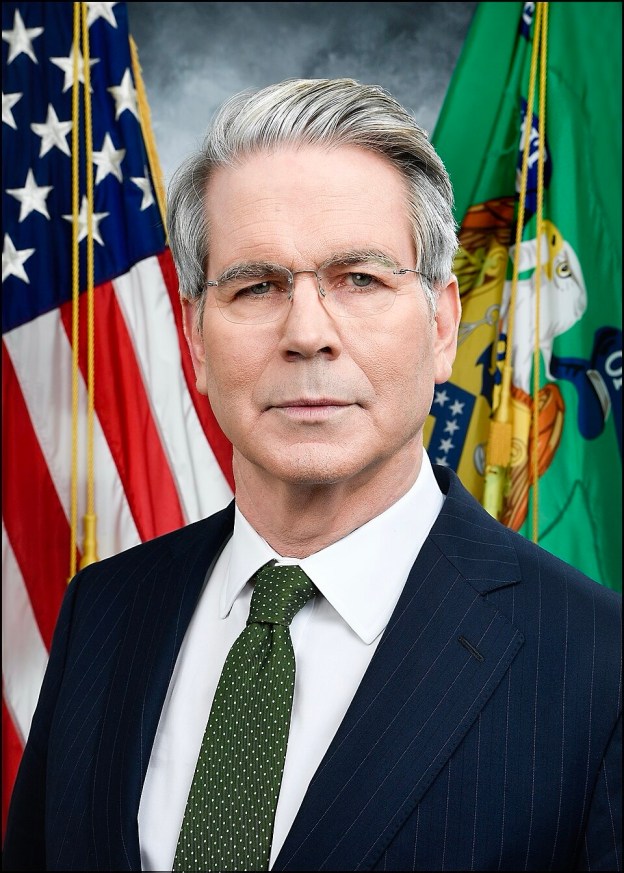
The Secretary is responsible for:
• Formulating and recommending domestic and international financial, economic, and tax policy.
• Participating in the formulation of broad fiscal policies of general significance for the economy.
• Managing the public debt.
• Overseeing the Department’s major law enforcement responsibilities.
• Serving as the financial agent for the U.S. Government.
• Manufacturing coins and currency.
As the chief financial officer of the U.S. Government, the Secretary also:
• Serves on the President’s National Economic Council.
• Serves as Chairman of the Boards and Managing Trustee of the Social Security and Medicare Trust Funds.
• Serves as U.S. Governor of the International Monetary Fund (IMF), the International Bank for Reconstruction and Development (World Bank), the Inter-American Development Bank, the Asian Development Bank, the African Development Bank, and the European Bank for Reconstruction and Development.
Statutory General Authority (31 U.S.C. § 321)
The Secretary shall:
1. Prepare plans for improving and managing receipts of the United States Government and managing the public debt.
2. Carry out services related to finances that the Secretary is required to perform.
3. Issue warrants for money drawn on the Treasury consistent with appropriations.
4. Mint coins, engrave and print currency and security documents, and refine and assay bullion (and may strike medals).
5. Prescribe regulations calculated to promote public convenience and security and to protect the Government and individuals from fraud and loss (applicable to those handling Treasury notes, U.S. notes, or other government securities, or engaged in preparing/issuing them).
6. Collect receipts.
7. Take steps to discover fraud and attempted fraud involving receipts, and decide on ways to prevent and detect fraud (with a view to prosecution).
8. Maintain separate accounts of taxes received in each State, territory, possession, and collection district (detailing kinds and amounts of tax, plus pay/allowances for collectors).
9. Advise the President on major domestic and international prudential policy issues related to all lines of insurance except health insurance.
The Secretary may prescribe regulations to carry out duties and powers, delegate duties/powers to other Department officers or employees (and transfer related resources as needed), and exercise other listed administrative authorities. Duties and powers of Department officers and employees are vested in the Secretary (with limited exceptions, such as those of the Comptroller of the Currency and certain administrative law judges).
Broader Department Functions the Secretary Oversees
Per Treasury’s stated role and basic functions, these include:
• Managing federal finances, government accounts, and the public debt.
• Collecting taxes, duties, and monies due the U.S., and paying the government’s bills.
• Currency and coinage (via the U.S. Mint and Bureau of Engraving and Printing).
• Supervising national banks and thrift institutions (certain functions now shared with other agencies).
• Advising on domestic and international financial, monetary, economic, trade, and tax policy.
• Enforcing federal finance and tax laws; investigating and prosecuting tax evaders, counterfeiters, and forgers.
• Supporting national security through economic sanctions (via OFAC), financial intelligence (via FinCEN), and related efforts.
Additional Notable Statutory and Institutional Roles
• Chairs the Financial Stability Oversight Council (FSOC), created to identify and respond to risks to U.S. financial stability.
• Oversees the Internal Revenue Service (IRS) for tax administration and enforcement, and the Office of Foreign Assets Control (OFAC) for sanctions.
• Fifth in the presidential line of succession.
• Signs Federal Reserve notes (with the Treasurer of the United States).

