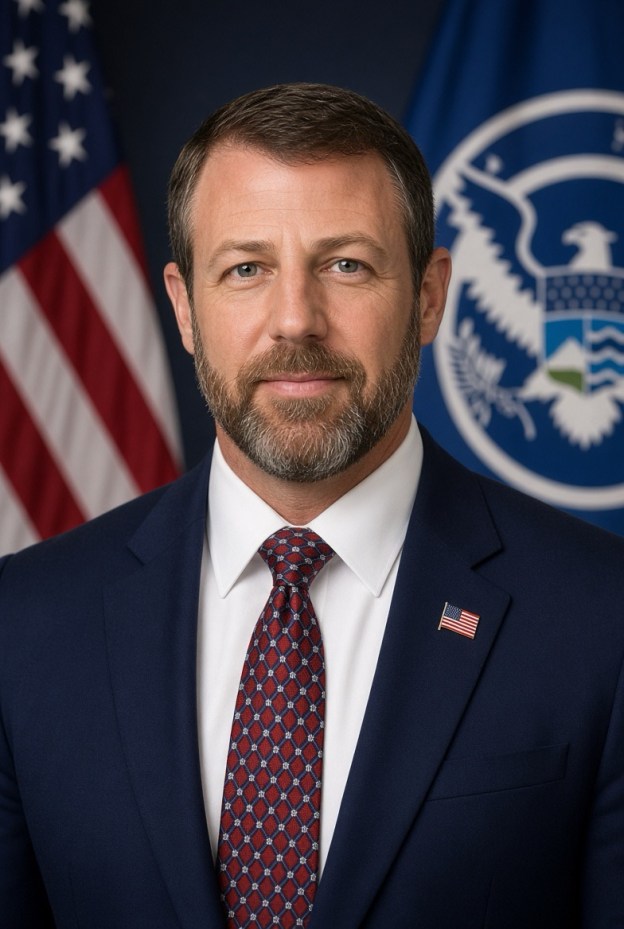
Statutory Core Functions and Powers (6 U.S.C. § 112)
• Serves as the head of the Department of Homeland Security and has direction, authority, and control over it.
• All functions of officers, employees, and organizational units of the Department are vested in the Secretary.
• May delegate functions to any officer, employee, or unit of the Department (except as otherwise provided by law).
• Has authority to make contracts, grants, and cooperative agreements, and to enter into agreements with other executive agencies as necessary to carry out responsibilities.
• Must take reasonable steps to ensure the Department’s information systems and databases are compatible with each other and with those of other departments.
• Coordinates with non-Federal entities (state and local governments, private sector, and others) on homeland security matters through the relevant coordination office. This includes:
• Planning, equipment, training, and exercise activities.
• Coordinating/consolidating federal communications systems related to homeland security.
• Distributing or coordinating warnings and information to state/local authorities and the public.
• May (subject to the President’s direction) attend and participate in National Security Council meetings.
• Issues regulations (governed by the Administrative Procedure Act, with specified exceptions for authorities transferred or later enacted).
• Appoints a Special Assistant focused on private-sector strategic communications, advisory councils, partnerships, preparedness standards, critical infrastructure best practices, and related coordination.
• Ensures that heads of Department offices and components account for the needs of children (including in underserved communities) in mission planning and execution, seeking relevant advice where practicable.
Department Mission Led by the Secretary (6 U.S.C. § 111)
The Secretary directs the Department in its primary mission to:
• Prevent terrorist attacks within the United States.
• Reduce the vulnerability of the United States to terrorism.
• Minimize damage and assist recovery from terrorist attacks that occur.
• Carry out functions of entities transferred to the Department and act as a focal point for natural and manmade crises and emergency planning.
• Ensure non-homeland-security functions of Department components are not diminished (except by explicit congressional act).
• Ensure economic security is not diminished by homeland security efforts.
• Ensure civil rights and civil liberties are not diminished by such efforts.
• Monitor connections between illegal drug trafficking and terrorism, coordinate efforts to sever them, and contribute to interdiction.
(Note: Primary responsibility for investigating and prosecuting terrorism generally remains with other federal, state, and local law enforcement agencies, except as specifically provided for transferred entities.)
Operational Scope and Oversight
As head of one of the largest Cabinet departments (roughly 260,000 employees and ~22 components), the Secretary oversees efforts in counterterrorism, cybersecurity, aviation/border/port/maritime security, administration and enforcement of immigration laws, protection of national leaders, critical infrastructure, chemical/biological/radiological/nuclear threat detection and protection, and disaster response/recovery. Key components include U.S. Customs and Border Protection (CBP), Immigration and Customs Enforcement (ICE), Transportation Security Administration (TSA), Federal Emergency Management Agency (FEMA), U.S. Coast Guard, U.S. Secret Service, U.S. Citizenship and Immigration Services (USCIS), Cybersecurity and Infrastructure Security Agency (CISA), and others.
Additional authorities stem from the broader Homeland Security Act (e.g., immigration enforcement and services transferred from the Attorney General, reorganization powers under section 872, cybersecurity-related authorities, research and development, and various component-specific powers). The Secretary advises the President on relevant matters and coordinates across the federal government, states, localities, the private sector, and international partners.
These powers and duties are statutory and apply to the office; day-to-day priorities under Secretary Mullin reflect the administration’s focus (e.g., border security, immigration enforcement, and related operations). For the full statutory text, see 6 U.S.C. §§ 111–112 and the Homeland Security Act of 2002 (as amended). Official DHS descriptions are available on dhs.gov.

